Get Hooked. Graphics for Crafts & Local Branding
As a brand designer who’s helped over 200 small businesses refine their visual identity—from coastal candle makers to mountain-town coffee roasters—I recently evaluated Get Hooked. for a real client project: a family-run bait-and-tackle shop launching a line of handmade fishing-themed jerky and hot sauce. The goal? To unify packaging, shelf tags, social posts, and in-store signage with warmth, authenticity, and subtle wit—not generic clipart.
A First Impression That Feels Human, Not Stock
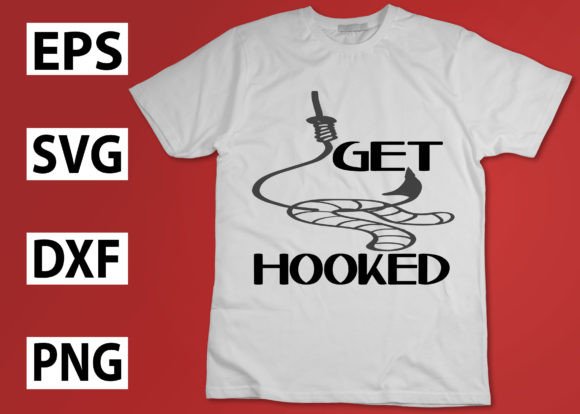
Get Hooked. lands with grounded charm. It’s not overly polished or digital-perfect—there’s texture in the line weight, a slight hand-drawn rhythm in the curves, and a warmth that reads as “locally made,” not mass-produced. Think rustic-modern: friendly but not childish, nautical but not clichéd, confident without shouting. It leans into organic imperfection—ideal for handmade businesses, food labels, boutique goods, or seasonal campaigns where emotional resonance matters more than sterile precision.
Where This Graphic Design Asset Earns Its Keep
In practice, Get Hooked. delivers versatility across touchpoints most local businesses actually use:
- Product labels: Works beautifully on kraft paper jars, matte-finish hot sauce bottles, or recycled soap wraps—especially when layered subtly behind product names or beside ingredient callouts.
- Packaging accents: Use the SVG or EPS files to add a quiet anchor motif along the bottom edge of a shipping box, or scale the design down for a foil-stamped corner detail on gift tags.
- Social media graphics: The PNG files (with clean transparency) drop seamlessly into Instagram carousels, Facebook event banners, or Pinterest pins—no background wrestling required.
- Printable design elements: From thank-you cards tucked into orders to seasonal flyers for a “Summer Catch” promotion, the vector files hold crispness at any size.
- Brand identity support: While not a logo itself, Get Hooked. functions powerfully as a secondary graphic—reinforcing tone in email headers, website banners, or menu graphics without competing with core branding.
Real Business Impact: Beyond Decoration
This isn’t just about prettier packaging. When applied thoughtfully, Get Hooked. strengthens key pillars of small business branding:
- Stronger first impression: A consistent, mood-aligned graphic helps customers instantly “get” your brand voice—even before reading a word.
- Better product recognition: Repeating the motif across labels, stickers, and social posts builds visual memory—critical for local retailers and farmers’ market vendors.
- Clearer visual hierarchy: Used sparingly, it frames important information (like flavor names or sourcing notes) without overwhelming.
- More consistent brand identity: Especially for solopreneurs juggling design tasks, having a cohesive, editable asset saves hours—and avoids haphazard Canva template hopping.
- Improved customer trust: Professional-looking packaging signals care and credibility—especially vital for food businesses, skincare brands, and handmade sellers facing discerning local buyers.
Where It Shines—and Where to Pause
Get Hooked. excels in contexts where personality and approachability matter: product mockups for Etsy listings, decorative borders on printable recipe cards, hero graphics for a “New Season, New Catch” campaign, or playful accents on children’s fishing gear packaging.
Use it carefully—or avoid it altogether—in these scenarios:
- Formal corporate branding (e.g., law firms, financial advisors)
- Labels under 1.5 inches tall—fine detail can blur or vanish in print
- Crowded packaging layouts where text density is high (ingredient-heavy food labels, compliance-heavy skincare)
- Backgrounds with low contrast (e.g., light gray text on a pale aqua version of the design)
- Luxury minimalist brands that rely on negative space and restraint
- Any area where decorative elements risk competing with essential legal or safety copy
Practical Brand Designer Notes You’ll Actually Use
Before locking in Get Hooked. for your next project, run these checks:
- Test it on a real packaging mockup—not just screen preview. Print a 2" x 2" label sample to assess legibility and proportion.
- Check how it renders in black and white. Does the line weight hold? Will it work for blind embossing or simple stamping?
- Preview it beside your brand fonts—serif, sans serif, script, and handwritten—to confirm visual harmony, not tension.
- Verify SVG editability: Open the file in Illustrator or Affinity Designer. Can you easily recolor paths or isolate elements for custom layouts?
- Review PNG transparency: Drop it over your actual label background color—does the edge blend cleanly, or does it leave a halo?
- Compare it against competitor packaging on the shelf (or online). Does it differentiate—or disappear into the crowd?
- Confirm commercial license terms. For client work, food labeling, or physical product sales, verify redistribution rights and attribution requirements upfront.
Ultimately, Get Hooked. isn’t a magic bullet—but as a graphic design asset, it’s a quietly effective tool for local business owners who understand that authentic, consistent visuals build trust faster than any tagline. Whether you’re designing for a coastal bakery’s “Tuna Melt Croissant” launch or a home decor shop’s “Lake Life” collection, this asset supports small business branding by grounding whimsy in craft, clarity, and commercial readiness. Just remember: great design isn’t about adding more—it’s about choosing what to keep, and why.