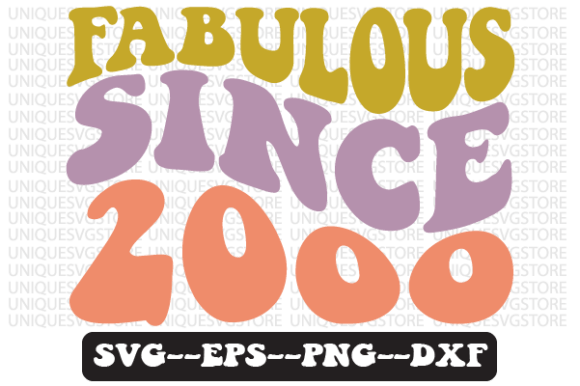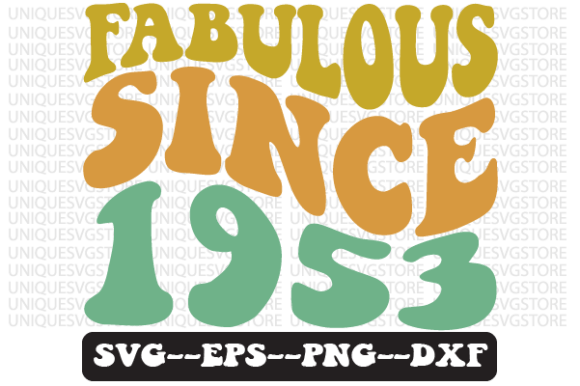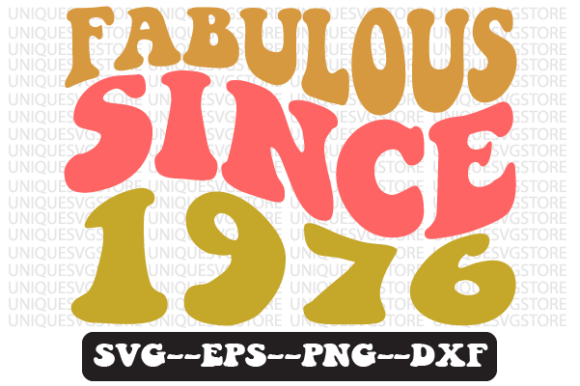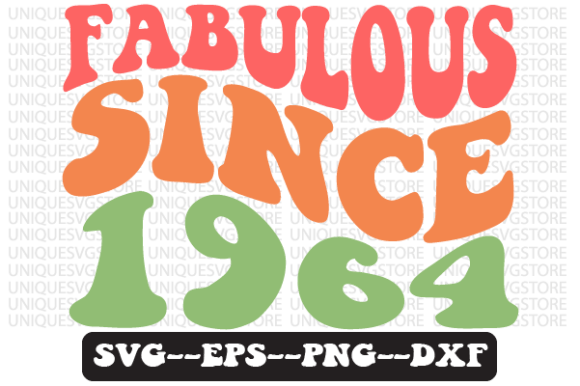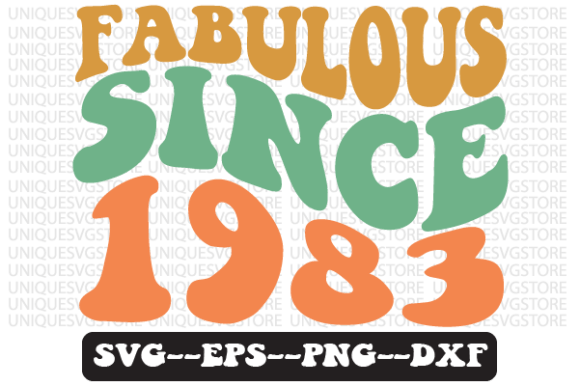
Fabulous Since 1983 Retro SVG Graphics for Crafts
As a graphic designer who’s built brand identities for over a dozen handmade businesses—from Etsy ceramic studios to seasonal pop-up boutiques—I recently evaluated Fabulous Since 1983 Retro Svg Design for a client launching a vintage-inspired summer collection of retro-printed tote bags and matching apparel. My goal wasn’t just to see if it “looks cool”—it was to assess whether this asset delivers real design value: consistency, scalability, emotional resonance, and commercial reliability.
First Impression: Nostalgia with Intentional Craft
The moment I opened the file, I felt the warmth of mid-80s design sensibility—bold sans-serif lettering with subtle shadowing, tight kerning, and that unmistakable “glow” in the curves of the ‘F’ and ‘B’. It’s not chaotic retro; it’s curated retro. The Fabulous quote retro Svg Design avoids cliché by balancing playful energy with structural clarity. There’s no distressed texture overload or forced grunge—it leans into clean-lined 80s optimism, which makes it surprisingly versatile for modern handmade businesses aiming for authenticity without irony.
Where This Graphic Design Asset Earns Its Place
In my client project, this SVG became the cornerstone visual motif—not as a logo (too stylistically specific), but as a campaign anchor. We used it across:
- Product mockups: Instantly elevated plain white totes and crewnecks in lifestyle shots—no extra illustration needed.
- Social media graphics: Scaled cleanly for Instagram carousels and Pinterest pins, especially when paired with soft pastel gradients or sun-faded photo backdrops.
- Printable design elements: Printed on kraft paper tags, sticker sheets, and packaging inserts—all retained crisp edges at 2"–4" sizes.
- Cricut projects: Cut flawlessly from vinyl and iron-on, thanks to smooth vector paths and minimal internal nodes.
- Sublimation design: Transferred cleanly onto polyester blends—no pixelation or color bleed when prepped correctly.
It also works beautifully as a supporting brand element—think corner accents on product labels, watermark-style overlays on blog banners, or animated variants for email headers. Because it’s rooted in strong typographic rhythm, it pairs effortlessly with serif fonts for contrast or handwritten fonts for layered personality.
Real-World Limits Every Designer Should Acknowledge
This isn’t a universal solution—and that’s okay. In client work, honesty about constraints builds trust. Here’s where I recommend using Fabulous Since 1983 Retro Svg Design with caution:
- Small-scale applications: Below 1.5", fine details like inner shadows and subtle spacing start to collapse—test early in black and white to confirm legibility.
- Minimalist or corporate branding: Its expressive voice clashes with ultra-clean, monochrome, or highly technical brand systems—save it for lifestyle, artisanal, or entertainment-focused clients.
- Complex backgrounds: On busy textures or patterned substrates, the design can visually recede unless given a subtle stroke or solid background shape.
- Low-contrast pairings: Avoid light gray text on off-white fabric—it’s not a high-contrast SVG design by default, so always preview on final substrate.
Professional Checks Before Client Deployment
Before clearing this asset for commercial use, I ran five essential checks:
- Licensing verification: Confirmed the included commercial license permits use in print-on-demand, Etsy products, and client-branded merchandise—no attribution required, no sales caps.
- File integrity: Inspected the SVG in Illustrator—paths are compound-free, layers are named, and no embedded raster images compromise scalability.
- PNG transparency test: Checked the included Fabulous Printable png Sublimation Design—edges are anti-aliased but not feathered, ensuring sharpness on dark garments.
- Color flexibility: Recolored the SVG in three brand-aligned palettes (mustard + navy, coral + charcoal, sage + cream) to confirm harmonious adaptation.
- Print proofing: Ran a test print on cotton jersey and polyester blend—no ink spread, no halo effect, consistent saturation across both.
Why It Fits Real Creative Marketplaces—and Why That Matters
What makes Fabulous Since 1983 Retro Svg Design more than just clipart is its intentionality as a creative design tool. It doesn’t ask you to force-fit it—it invites smart integration. For digital sellers building Canva templates, it adds instant thematic cohesion. For crafters running Cricut projects, it eliminates hours of font hunting and kerning tweaks. For marketers launching limited-edition drops, it delivers recognizable, ownable visual shorthand—“fabulous” isn’t just a word here; it’s a mood, a tone, a promise.
Crucially, it respects the labor behind small business branding. It doesn’t oversimplify identity—it supports storytelling. When placed beside hand-drawn icons or custom photography, it grounds the composition with confident, era-specific rhythm. That balance between nostalgic charm and professional polish is rare in the broader creative marketplace—and exactly why I approved it for my client’s launch.
A Final Note on Visual Hierarchy and Emotional Trust
Design isn’t just about aesthetics—it’s about perception. A well-chosen graphic design asset like Fabulous Since 1983 Retro Svg Design subtly tells your audience: *This brand knows its voice. It values craft. It’s intentional.* That impression builds visual trust faster than any tagline. In editorial design or packaging design, that emotional resonance translates directly to dwell time, shareability, and conversion. Just remember: hierarchy remains king. Let this asset lead the vibe—but never let it drown supporting copy, product photos, or functional information.
If your next project lives at the intersection of handmade business, small business branding, and joyful visual storytelling—this SVG design earns its place in your working toolkit. Not as filler. Not as trend bait. But as a considered, capable, commercially sound piece of modern design.